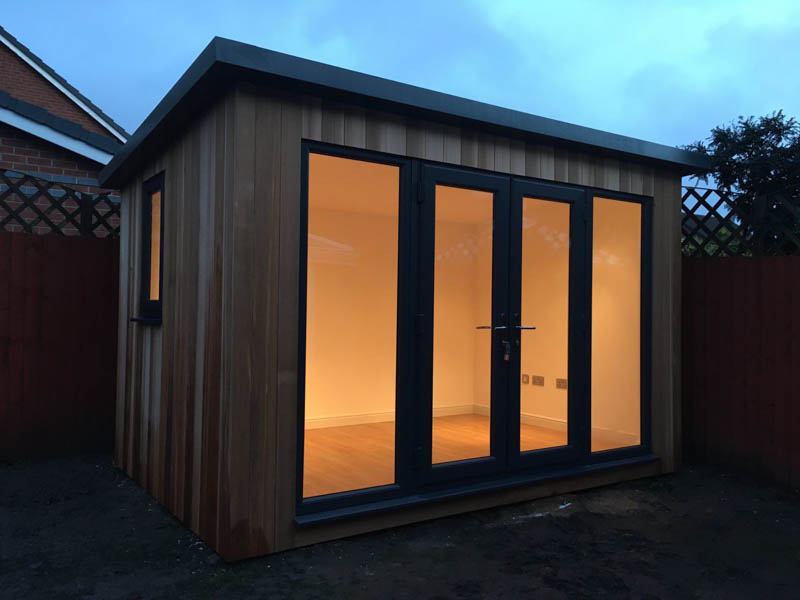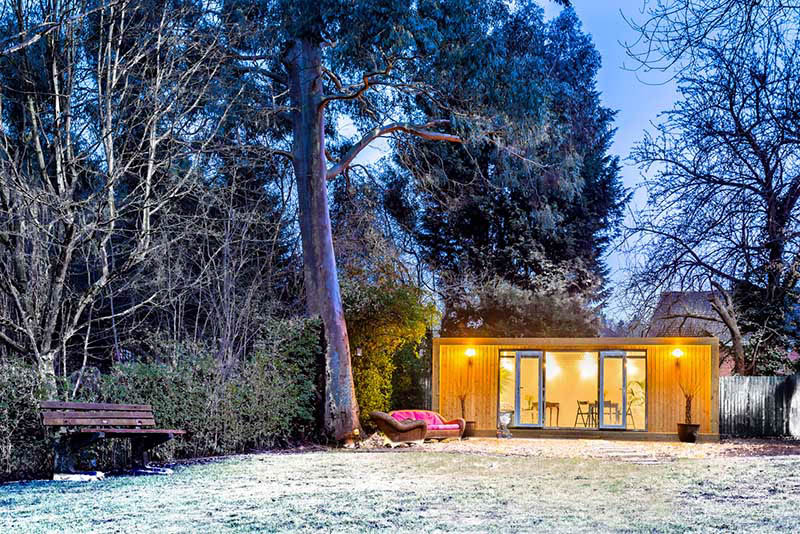

One of the key things that makes a garden office building stand apart from other garden buildings such as a shed, summer house or log cabin is the fact that it is a highly insulated structure. An insulated garden office is specifically designed so that it can be comfortably used every day of the year, if that is what its owner wants. While in our opinion, a heater is needed to boost the temperature during the coldest days of the year, many suppliers say their offices are so well insulated that a heater is not required.
Good insulation predominately comes to mind when thinking about how warm a garden office will be, but a well-insulated garden office also comes into its own during the hot weather. While in the winter you want the insulation to keep heat within the office, in summer you’ll want to keep the interior of the office as cool as possible. Good insulation levels will facilitate this.
The floor, walls and roof should all be insulated
For optimum performance, the floors, walls and roof of a garden office should all be well insulated. This might seem obvious, but some buildings sold as garden offices do not feature insulation in all three elements. Log cabin buildings, for instance, might feature insulation in the floor and roof, but not in the walls. Unless you opt for a high spec log cabin that uses a substantial thickness timber, you will be metaphorically be watching your heat flow through the walls.
Insulation in the floor, walls and roof of an office should be coupled with double glazing in the doors and windows. It is useless having a well-insulated building that lets the heat leak through single glazing. In reality, a quality garden office is going to come with double glazing as standard, and in fact, many suppliers choose to use special coatings on the glass and gases between the panes to enhance the performance further. Our research has shown that some garden offices that cost less than £5,000 are still offering only single glazed doors and windows as their standard option.
Different insulation systems are used
There are two key building systems used to create a garden office. The traditional method is to use a timber frame core structure. This system creates voids in the frame which are then filled with insulation. The second option is to use a structurally insulated panels which are known as SIP’s. These panels are a sandwich of layers of structural board and a foam insulated middle. These SIP’s panels have become very popular in recent years with some suppliers utilising the same SIP’s as are used to build a house, while other firms have developed their own ‘in-house’ version making use of foil backed insulation sheets.
There are lots of different insulations used in garden office construction
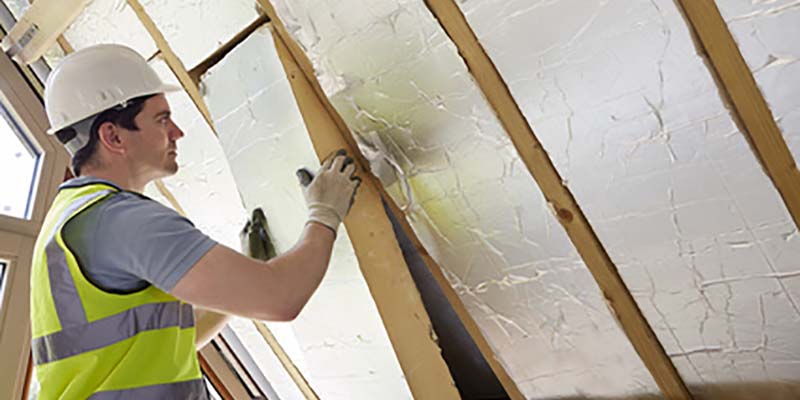
There are several different types of insulation used in garden office design. We look at each of them in detail in this article. When researching your options, you will find that the most commonly used option are PIR insulations such as Celotex. PIR Insulation is a rigid foam board that has a foil finish on each side. It has become very popular with garden office designers because a highly insulated wall can be created without it having to be too thick. This benefits you the customer in that you are achieving a well-insulated room, without sacrificing valuable interior space by having very thick walls.
Insulated garden office designs
We only feature insulated garden offices on this site. Our experience tells us that buying a garden office that is insulated in the floor, walls and roof, and also features double glazed doors and windows is your best long term bet when it comes to usability and long term investment. If you would like to explore some insulated garden office designs take a look at this section of our site.
Suggested further reading:
- Garden office insulation
- Elements not to cut corners on when buying a garden office
- What types of heating can a garden office have